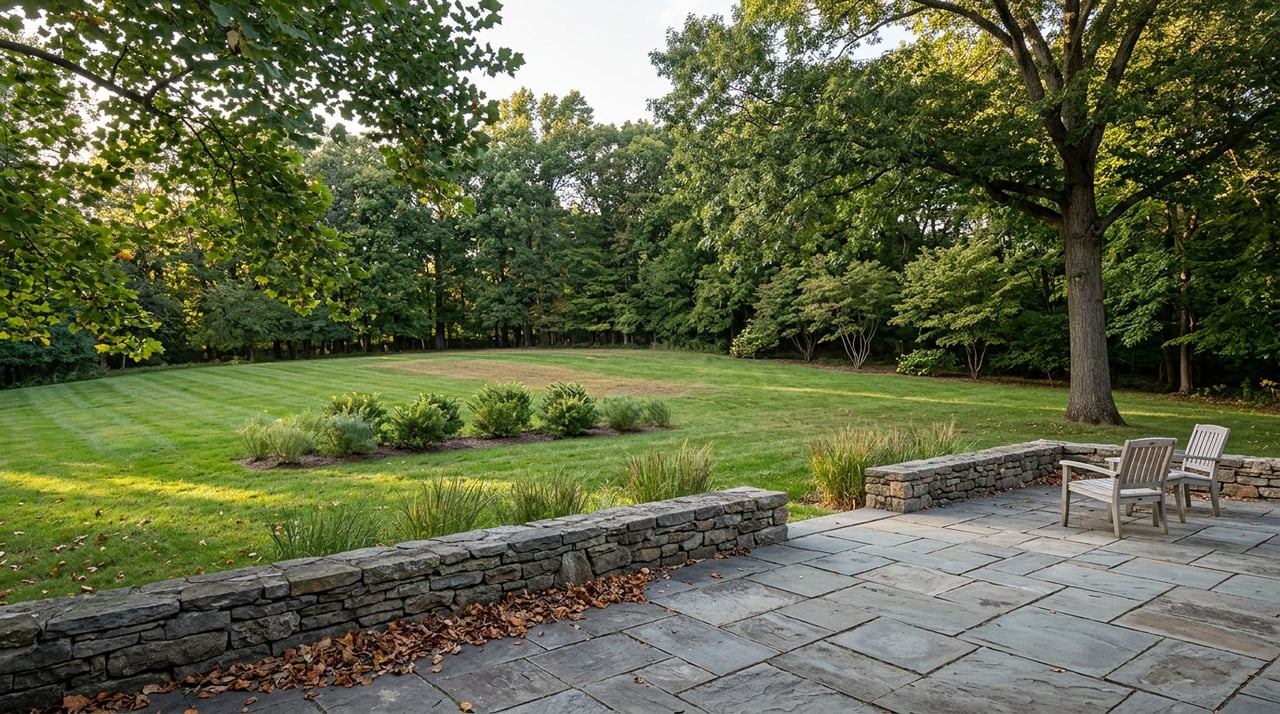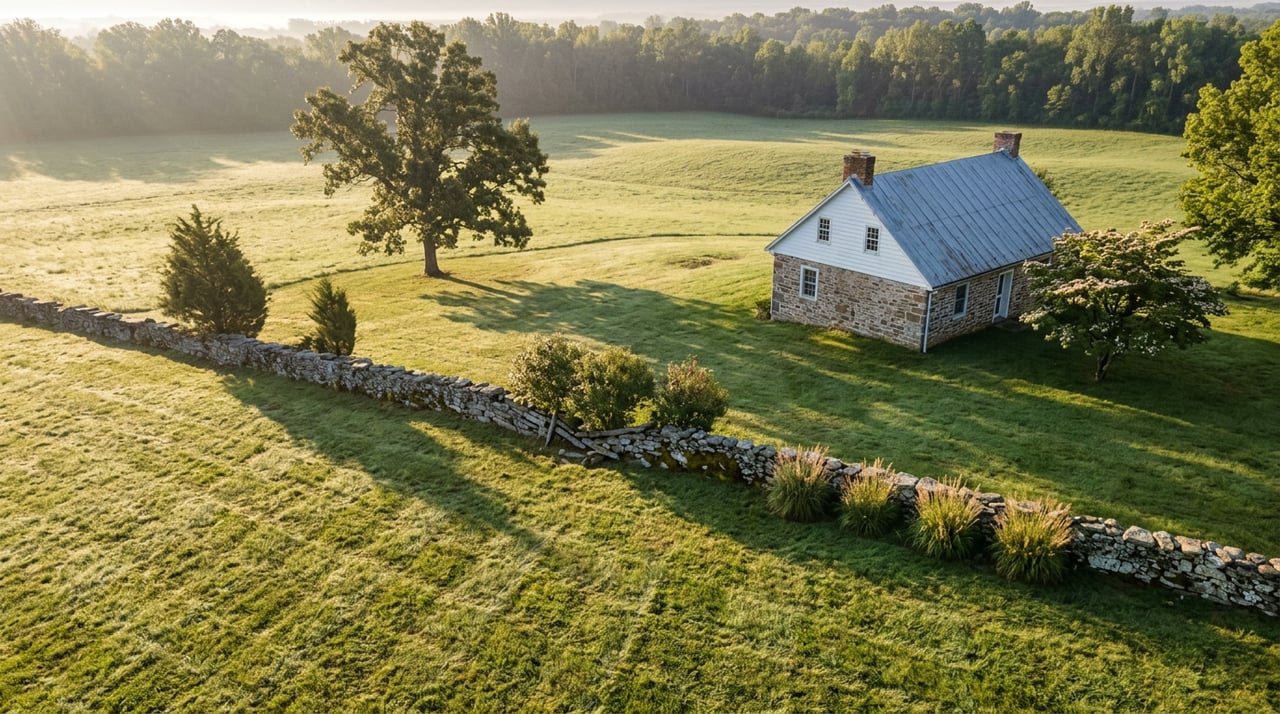
A buyer looking at ten acres outside Unionville sees rolling pasture, a tree line, maybe an old bank barn, and does the math on what could go there: a second dwelling for aging parents, a small subdivision, an arena and a guest cottage. Then the title search comes back, and half of that math disappears. The land already has an agricultural conservation easement on it, recorded years ago, and the development rights the buyer was mentally spending were sold off long before the listing went live.
This isn't rare in East Marlborough, West Marlborough, and Newlin Townships. It's closer to the default. The Brandywine Conservancy began placing permanent conservation easements on land in this corner of Chester County more than a quarter century ago, and the Cheshire Hunt Conservancy notes that the region now has more than 30,000 contiguous acres under conservation easements and deed restrictions, much of it concentrated in the Buck and Doe Run Valleys that feed the Brandywine River and, eventually, Wilmington's water supply. If you're evaluating land near Unionville, the question isn't just what the parcel costs. It's what was already decided about it before you found it.
What an Easement Actually Removes
An agricultural conservation easement doesn't transfer ownership. The landowner keeps the deed, keeps the right to farm, keeps the right to sell or pass the property to the next generation. What the easement removes is the development right, the ability to subdivide, build additional structures beyond what the easement permits, or convert the land to non-agricultural use. Chester County's Agricultural Land Preservation Program pays landowners for that right through an independent appraisal, and once the county's offer is accepted, the restriction runs with the land permanently. It binds every future owner, not just the person who signed it.
The eligibility rules explain why easements cluster the way they do around Unionville. A farm doesn't qualify on its own merits alone. It has to sit inside a township-designated Agricultural Security Area first, and the acreage bar changes depending on what's already next door:
| Situation | Minimum acreage |
|---|---|
| Farm adjacent to already-preserved land | 10 tillable acres |
| Farm not adjacent, Commonwealth/County Program | 35 acres |
| Farm not adjacent, County Challenge Grant Program | 25 acres |
That adjacency rule is the mechanism behind the concentration you see on a map. Once one large farm is preserved, the acreage bar drops for its neighbors, which makes it easier for the next parcel to qualify, which makes the block of protected land grow outward rather than start fresh somewhere else. Thirty years of that pattern is how a single valley ends up almost entirely spoken for while a parcel two miles away, with no easement at all, sells for a very different number per acre because it's one of the few pieces left that can still be subdivided.
Why a Lender Might Slow You Down
Buyers sometimes assume eased land is simpler to finance because the price per acre is lower. It can go the other way. A permanent restriction on future use changes how a lender calculates collateral value, and not every lender has underwritten that kind of property before.
The mechanics matter most when a mortgage already exists on land the owner wants to place under easement, which comes up often with family farms being preserved as part of a generational transition. According to guidance published by WeConservePA, the mortgage holder has to weigh whether the property will still provide sufficient collateral after the easement is granted, typically requiring the post-easement value to exceed the remaining loan balance by at least twenty percent. If the owner wants to claim the transaction as a charitable donation for tax purposes, the lender also has to formally subordinate its rights to the easement holder, a step the IRS treats as a requirement, not a formality. None of this is impossible. It just takes longer than a standard closing timeline assumes, and it works best when the lender is looped in before the easement terms are finalized rather than after.
If you're the buyer of already-eased land, the friction looks different. You'll want a lender and an appraiser who have priced restricted acreage before, because a standard residential comparable-sales approach doesn't capture what the restriction did to value. Shopping that loan with a lender unfamiliar with eased collateral is where closings near Unionville tend to stall.
The Township Hasn't Finished Deciding Either
Land that has no easement at all isn't necessarily a blank canvas either. East Marlborough Township's zoning code states its objectives plainly: protect the historic character of the villages of Unionville and Marlborough, safeguard stream valleys and groundwater recharge areas, and coordinate land use across a shared regional plan that also covers West Marlborough and Newlin Townships. That comprehensive plan means a parcel's buildability can depend on decisions made jointly across three townships, not just the one where the address sits.
This isn't dormant policy. The township's Board of Supervisors met on April 8, 2026, and approved Resolution 2026-19, a preliminary and final land development plan for a veterinary diagnostics laboratory at 382 West Street Road. The same meeting took up a separate preliminary and final land development plan at 1774 West Doe Run Road for a new dwelling, reviewed under the township's Land Development Ordinance with its own set of waivers and conditions. Neither project involved a conservation easement. Both still went through months of formal township review before a shovel could go in the ground.
The practical takeaway: whether or not a parcel near Unionville is eased, plan on a land development review that considers stormwater management, site design, and the township's stated interest in preserving the character of Unionville and Marlborough village. Feasibility here is rarely a rubber stamp, and the timeline for a land development approval can run longer than a typical residential permit process elsewhere in Chester County.
What This Means If You're Evaluating a Parcel
Before making an offer on acreage near Unionville, a few things are worth confirming early rather than during due diligence:
- Pull the deed and check for a recorded conservation or agricultural easement. It will be there in the title work, but knowing before you write an offer saves a renegotiation later.
- Ask whether the parcel sits inside an Agricultural Security Area. That designation is a prerequisite for future preservation eligibility even if the land isn't eased yet, which matters if you're the seller weighing whether to preserve before listing.
- If you're financing eased land, ask your lender directly whether they've underwritten restricted acreage before. If not, get a second opinion before you're deep into a rate lock.
- If you're building, confirm with the township whether your plan needs a formal land development review, not just a building permit. Given the volume of that kind of business currently in front of the Board of Supervisors, budget real time for it.
- If you're the one considering placing an easement on land with an existing mortgage, contact your lender before you finalize easement terms with a land trust or the county. Subordination takes time to arrange.
A Few Questions Worth Asking Directly
Does a conservation easement mean I can never build anything on the land? Not necessarily. Easements are individually negotiated, and many still permit a residence, agricultural structures, and continued farming. What they remove is the right to subdivide or convert the land to non-agricultural use. Read the specific easement document. Every one is different.
Can I get a mortgage on land that already has an easement? Yes, but not every lender prices it the same way. Because the restriction limits future use, lenders and appraisers need to understand how the easement affects long-term collateral value. Working with a lender who has experience with restricted acreage tends to move faster than starting with a standard residential lender.
How do I find out if a parcel near Unionville already has an easement before I make an offer? The easement is recorded in the property's deed and title history, so a title search will surface it. Chester County also maintains parcel-level records of land under agricultural easement through its preservation program, which is worth checking directly if you're evaluating multiple properties in the area.
Land near Unionville rewards patience more than speed. The parcels that look the simplest on paper are often the ones with the most already decided about them, and the ones that look complicated sometimes turn out to be the more straightforward close once you understand what's actually recorded against the title. If you're weighing a piece of land, a building lot, or a farm property in this part of Chester County and want someone who reads easements and township minutes as closely as comparable sales, Gary Scheivert & Associates has spent decades working through exactly this kind of transaction. Reach out before you write the offer, not after.